What Are Triops? Learn How to Raise and Breed Your Own Triops At Home!
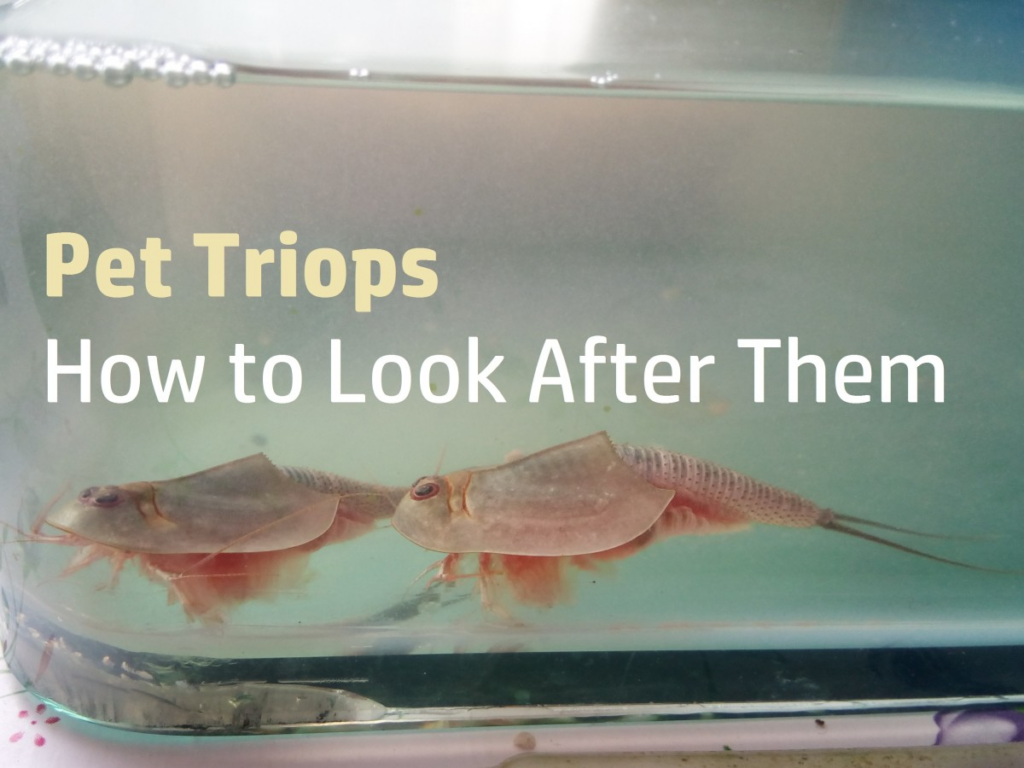
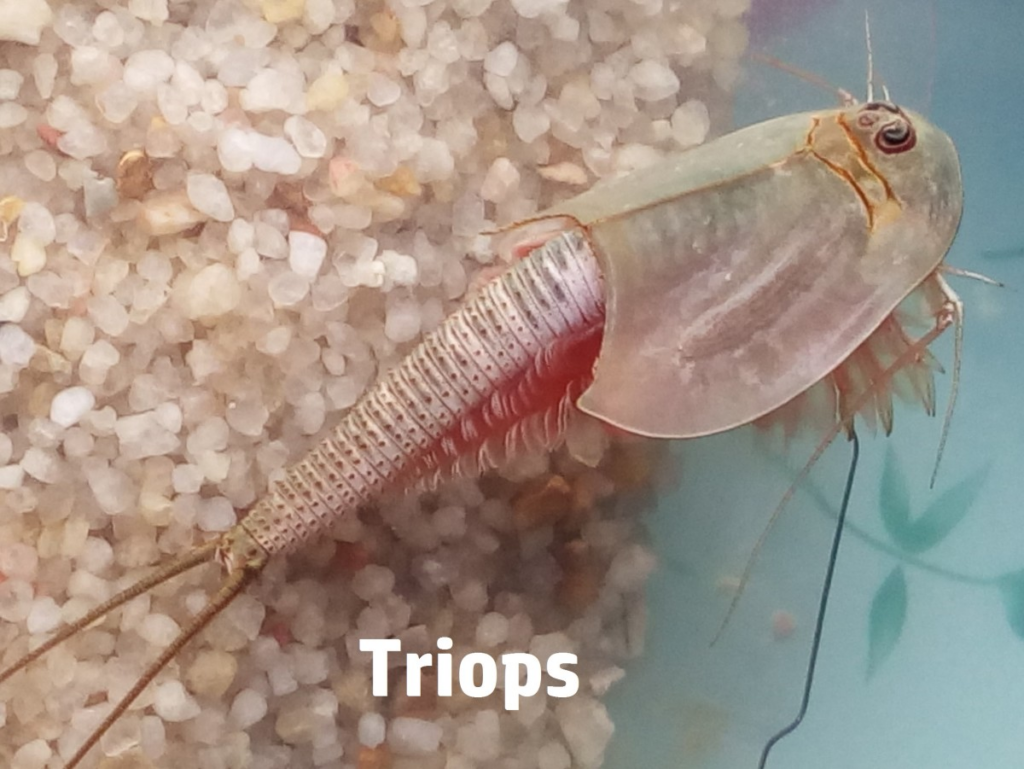
Triops are prehistoric critters that existed before the dinosaurs. They look a bit like tadpoles with shields, hence they are also known as the tadpole shrimp and shield shrimp. Most Triops are hermaphrodites, which means their eggs do not need to be fertilized and will still hatch into little baby triops.
There are many species. The common species are Triops australiensis, Triops granarius, Triops cancriformis, Triops longicaudatus, Triops newberryi, and so on. Triops can be found in the wild in areas where bodies of water tend to evaporate and dry up for several weeks or months. Then, the rain pours from heaven to drench those areas and bring back new life—including hatching Triops eggs that were laid before the drought.
Triops means “three eyes,” and that is what these little creatures appeared to have. They have a pair of compound eyes and in addition, there is a third eye in between the two eyes. Even though Triops have three eyes, they have poor eyesight!
They have many legs which act as antennae for finding food and for breathing. Triops can also move food around with their legs until the food reaches their mouths. Half of the time, they can be seen swimming upside down, just like brine shrimp.
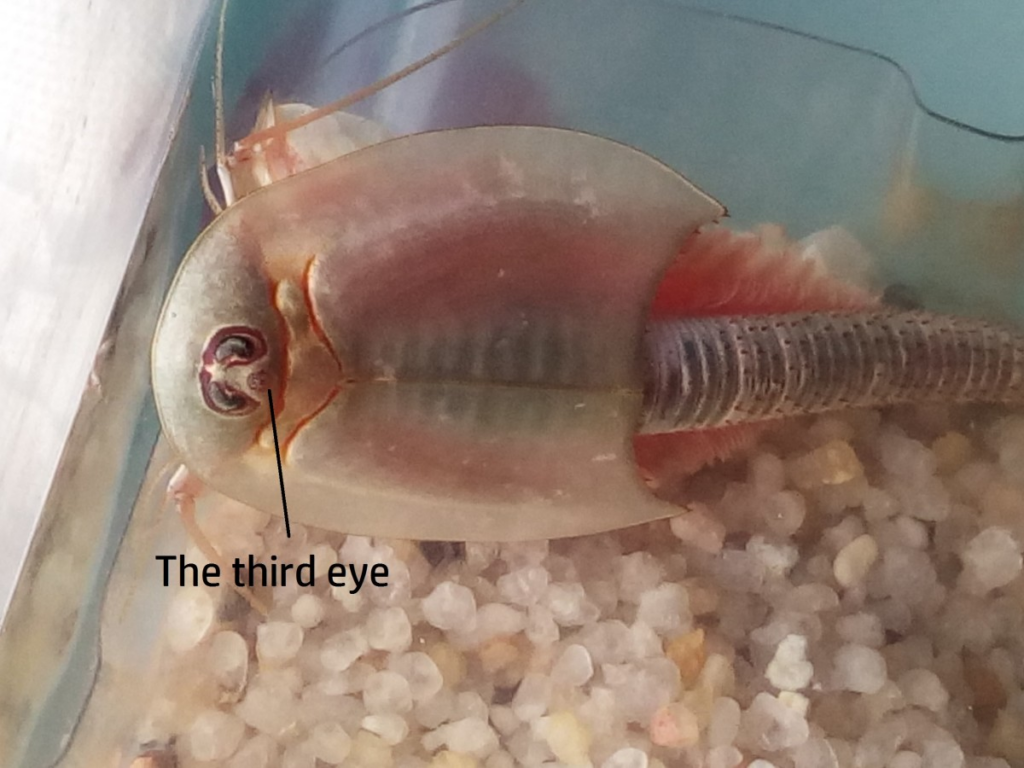
Triops are omnivores; they eat anything including each other if there is no other food available. In their natural habitat, they feed on plant matter, algae, daphnia and mosquito larvae. Their appetite is enormous, they eat ferociously at all times in order to grow and breed at a fast rate. Unsurprisingly the lifespan of a triops is really short.
A newly hatched Triops is so tiny, just a small little dot wriggling in the water. However, it grows quickly and doubles in size every day until it reaches adult size. Most mature in two weeks and will start laying eggs. They can only live up to three months, but some of them die after laying eggs several times.
The adults of the Triops australiensis species can grow up to 7 cm long, while other species, like Triops cancriformis, grow up to 11 cm long.
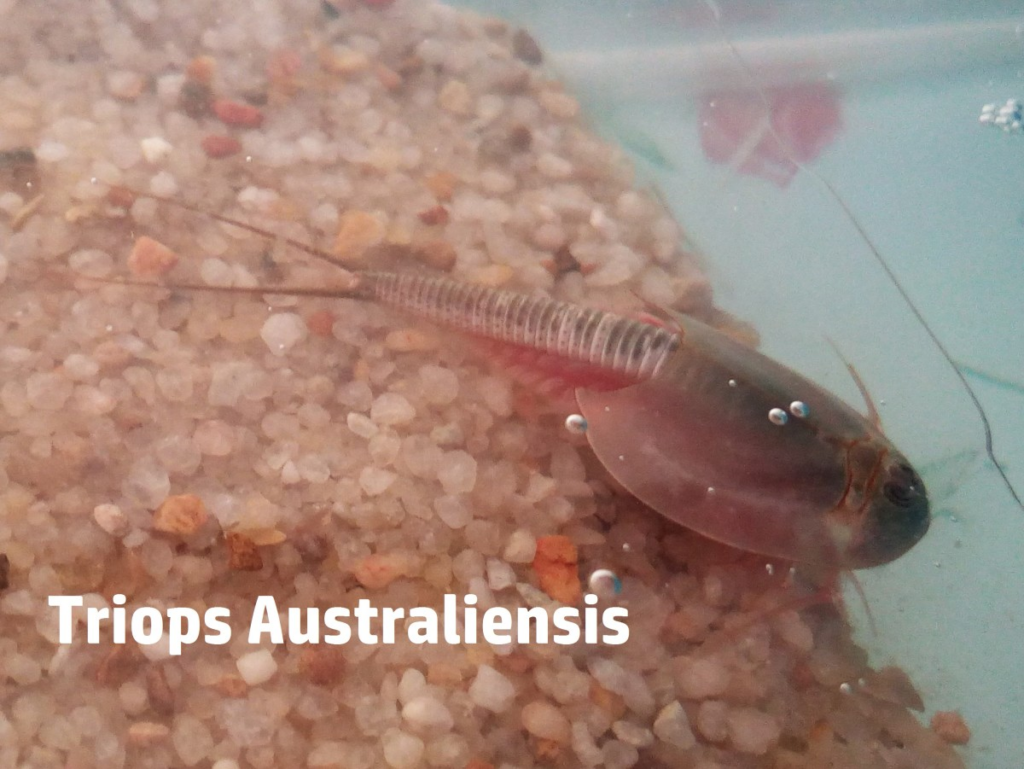
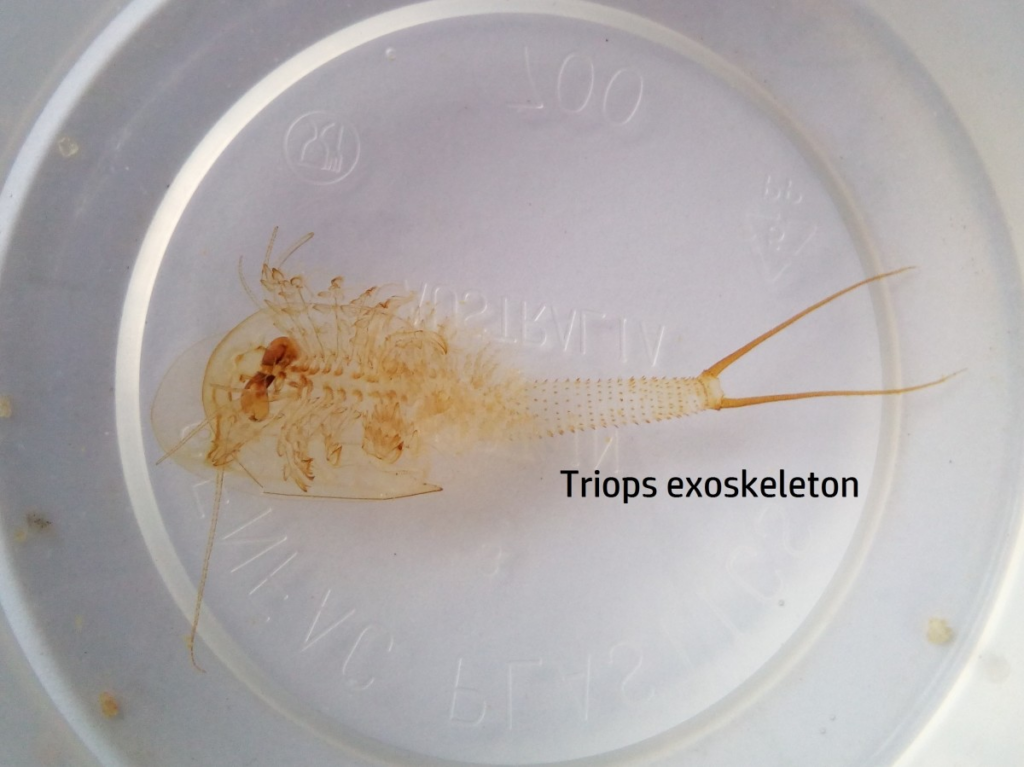
In order to grow, they have to shed off their exoskeletons. This process is called molting, just like what hermit crabs and other crustaceans do. Young Triops can shed off their exoskeletons every day so that they can grow quickly.
The process of molting is also very quick (typically lasting several minutes); they then become a little bigger, thicker and darker in color after shedding off their exoskeletons.
Some may get injured or trapped by their own skin if they do not shed off their exoskeletons successfully. In the end, the creature dies due to stress and starvation.
Molting can be beautiful . . . yet deadly!
The eggs of the Triops can stay dormant for years and decades; that is probably why they have existed since prehistoric times. The structure of the eggs is similar to the eggs of brine shrimp (famously known as sea monkeys); they have a special layer of covering that protects the eggs from extreme temperatures and drought.
In the wild, the eggs go through a drying phase or drought before the next generation is hatched again when the summer rain returns.
Dried eggs are sold in Triops kits similar to sea monkey kits. The eggs can be hatched and raised as pets for kids to learn and enjoy. The success rate of keeping them as pets is sometimes quite low for the inexperienced pet owner.
The eggs require certain conditions in order to hatch successfully, and the water conditions are very important; there should not be any trace of minerals in the water. Tap water is a “no,” same with mineral water. Rain water contains certain polluted elements; sometimes the eggs do not hatch either. Bottled spring water is highly recommended.
The optimum temperature is above 23°C for the eggs to hatch. Once hatched, they will survive at temperatures between 23°C to 32°C. A sudden fluctuation in the temperature of the water can also kill the Triops, so it is quite a challenge when changing the aquarium water.
A kit usually comes with a small plastic aquarium, shallow container, eggs, some food for the babies and adults, a small bag of leaf litter and instructions. The leaf litter is added to the water in a shallow container before the eggs are added. The eggs will hatch in 24–48 hours if the water temperature is warm enough. Newly hatched triops look like water fleas wriggling around and they do not need to be fed until after three days. The babies will double in size every day. They start to develop a shell when they are around three days old and resemble adults.
Baby food is included in the kit. When they are around six days old, they can be fed with the adult food provided. Other food like fish pellets, carrots, daphnia and dried shrimps can be given to the Triops as they grow. Around the eighth day, they will be strong enough to be transferred to the plastic aquarium.
The aquarium water needs to be kept clean at all times. Waste matter and uneaten food should be removed once or twice a day; otherwise, the water becomes dirty and very cloudy. Care must be taken when changing the aquarium water. Remove no more than one-third of the water each time and add in the same amount of clean spring water. If the water is very cloudy, wait at least 10 minutes before repeating the water change.
Small pebbles or sand can be used as substrate. Aquarium sand without mineral traces and coral sand are most suitable substrate. Sand from beaches and builder’s sand is not suitable as they contain a lot of other elements that are toxic to Triops.
When adult Triops mature in around 14 days, they will start to lay eggs if there is a layer of substrate in the aquarium. A pair of egg sacs start to develop on the underside of their bodies. They will start to dig the sand when it is almost ready to lay some eggs. The digging increases when eggs are being laid and get buried in the sand. This is nature’s way of hiding the eggs from other predators in the wild. The young sometimes lay their eggs twice a day. As they get older and older, eggs are laid once a day and then less frequent until they finally reach the end of their very short lives.
Triops will leave behind hundreds of eggs in the substrate. The eggs are visible under a magnifying glass. They are light brown or beige in color. The eggs need to be dried before they are able to hatch the next generation.
Carefully pour away the aquarium water and leave the sand to dry out completely. It takes around two weeks to dry the sand and eggs. The sand and eggs can then be kept in an airtight container, and the eggs will be viable for many years.
To hatch some eggs again, pour some bottled spring water in a small container and add in one tablespoon of the sand. Under the right conditions, you will get baby triops again.
First things first: you need to buy a Triops kit that comes with eggs and all the items for keeping them. I got my first Triops kit from Australian Geographic as we are not allowed to import the eggs into Australia due to quarantine issues.
© 2018 lady rain
About the author

Lady Rain lives in Australia and enjoys writing about travels, paper quilling crafts and historical events.