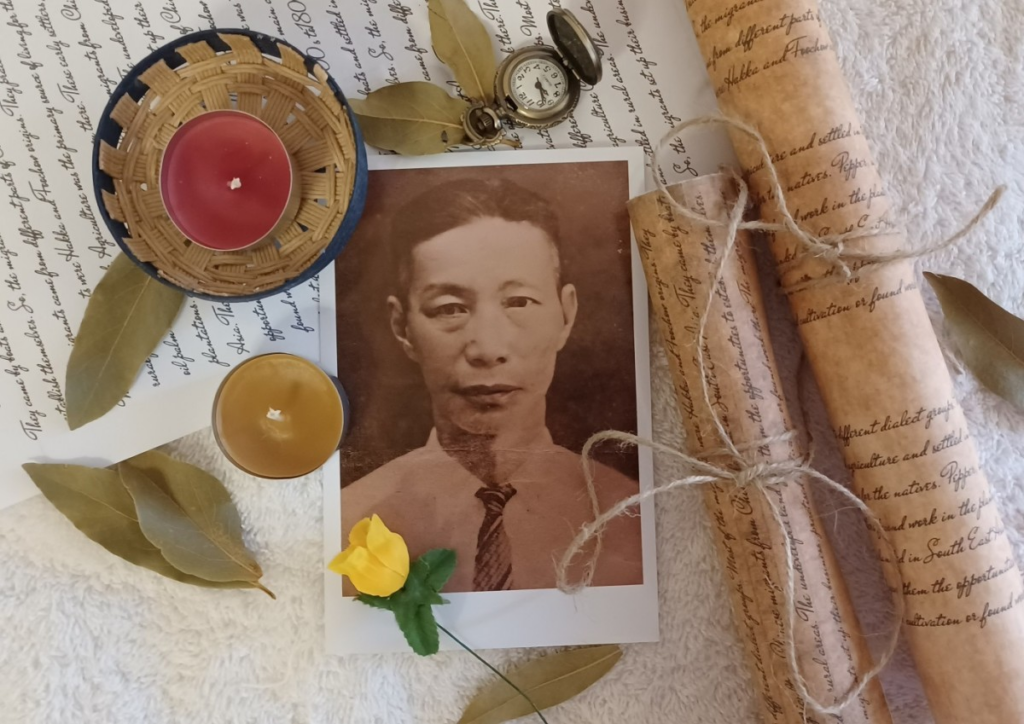
This is an article about the history of the early Kapitans and Yu Seng Road in the town of Miri in Sarawak.
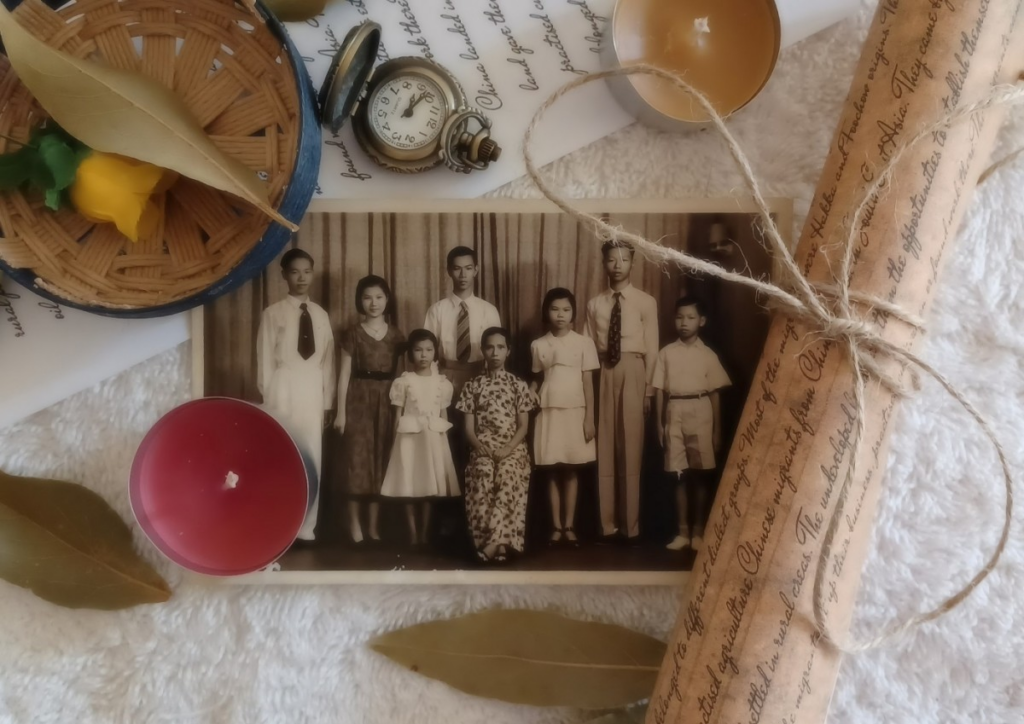
In the 1700s to 1800s, Chinese migrants from China landed in Southeast Asia. They came by boat and settled in rural areas. The undeveloped land gave them the opportunities to establish themselves. So, the migrants set up their businesses, practised cultivation or found work there.
The migrants came from different parts of China. They belonged to different dialect groups. Most of the migrants were of Hakka and Foochow origins. They practised agriculture and settled in the rural parts of Sarawak. Agriculture was the primary source of living for the natives. The primary crops cultivated there were pepper, sago, oil palm, and rubber. As a result, these early settlers found work in the plantations.
In 1839, the British colonised Sarawak and the state came under the rule of the Brooke government.
By the late 1800s, there was an influx of migrants to Sarawak. Again, they arrived by boat. Among these Chinese settlers were the Hokkiens, originating from Xiamen. Unlike the Hakkas, the Hokkiens were not farmers. They were merchants seeking business opportunities in a new land.
The pioneer Hokkiens settled in the Marudi region when they showed up in Borneo. One of the pioneers was a merchant, Chong Heng Shiong (pronounced Chng Heng Chio in Hokkien). Just like other early immigrants, he went overseas to seek riches, leaving behind his wife and children. The migrants built shophouses and set up their trade in Marudi. Despite this, a small group of pioneers, consisting of four young men in their late teens and early twenties, journeyed to Miri to make a living. Chong Heng Shiong was among the four men.
After arriving in Miri, Chong Heng Shiong opened one of the first four grocery stores. His general merchandise store Kee Huat (Ji Fa Hao/吉發號) sold assorted essential goods to the influx of migrants. At the same time, he bartered with the native people. Chong Heng Shiong’s business flourished. His name was already the talk of the town in Miri. He had leadership skills and was admired by the overseas Chinese. Consequently, the Rajah Brooke government appreciated his leadership and competence.
During those years, Miri was just a small and undeveloped fishing village. When oil was discovered in 1910, the town became famous. With the oil production in full swing, Miri was growing fast. At the same time, trade between Borneo, Singapore, Hong Kong and China was bustling. As a result, there was an explosion of business activities in the region.
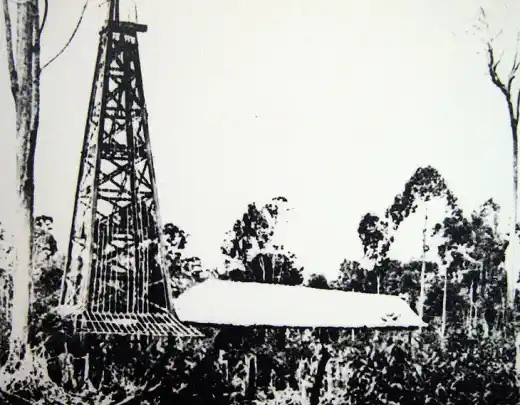
The oil industry was booming. The Chinese migrants from parts of Southeast Asia flocked to Miri. They wanted to make a good living and build their trade. The population in the oil town surged. The Brooke government had to implement laws to control the people.
The relations between the government and the Chinese settlers were complicated. There was a lack of communication between the British government and the people. And then, there was the language barrier. Both parties needed someone to represent them.
As a result, the British government appointed Chong Heng Shiong as the first Chinese chief to represent the people. He was named the first Kapitan of Miri. His role was to assist the government in dealing with complaints and disputes between the government and the community. Because he was a leader in the community, he helped build the town from the start.
The word “Kapitan” comes from the Latin word “capit,” which means “head.” It is used in other languages to mean a captain of a ship, head of a state, a chief, appointed leader, major in the army, etc.
Latin: Capitāneus
Dutch: Kapitein
Spanish: Capitán
French: Capitaine
German: Kapitän
Hungarian: Kapitány
Italian: Capitan
Married in Xiamen, Chong Heng Shiong and his first wife in China adopted an infant boy from a village in “Long Xi” district in 1893. They named him Chong Yu Seng (Chng Ewe Seng in Hokkien dialect). So, Yu Seng was the eldest child of Chong Heng Shiong and his first wife in China. They had several children.
In the later years, Chong Heng Shiong and his second wife in Miri had other children of their own.
Chong Heng Shiong’s business in Miri was flourishing. Around 1908, he organized for his fifteen-year-old son Yu Seng to come to Miri. Yu Seng was to assist his father in the grocery store.
Yu Seng was a hard worker. He toiled like all the other labourers hired by his father (the workers were known as coolies back then). Sometimes, his father needed him to travel between Xiamen, Singapore, and Miri for business goods. While at sea, he would accept a job scrubbing the ship deck in order to earn some money.
While working at the grocery store, Yu Seng learned exceptional business skills from his father. Both father and son worked hard. Their plan was to expand and diversify their business. Both of them were respected by the British government and the Chinese community.
When Chong Heng Shiong died of illness, Yu Seng was in his early twenties. Yu Seng took over his father’s business and expanded into more lucrative ventures such as local product sales, wine making and a pawn shop. He also took care of his two younger sisters until they got married and left home.
Chong Yu Seng’s first wife was from China. She did not bear him any children. According to Yu Seng’s sisters, his first wife did not get along with them. She died of an unknown abdominal illness.
The second wife of Yu Seng was of non-Chinese origin with a tan complexion. The couple was without a child. Because Yu Seng loved his second wife very much, they adopted a girl and raised her as their own.
At the same time, Yu Seng’s business prospered and he believed his adopted daughter had brought him good luck. She would forever have a special place in his heart.
On one of his business trips to Singapore, Yu Seng met a Cantonese opera singer who was the daughter of a Chinese migrant in Singapore. Her name was Yam Ah Soon. He brought her back to Miri to be his third wife.
Chong Yu Seng and Yam Ah Soon had seven children. The eldest was a boy born in 1930, followed by a girl in 1933. Then another three boys and two girls.
The Chong family led a comfortable life in Miri. Nannies (called amahs) were engaged to watch the children. Each boy had their own nanny. All the servants were regarded as part of the enormous household.
Yu Seng’s wife Yam Ah Soon was soft-natured and lived like royalty. She was not compelled to do house chores or watch the children. She devoted most of her days to playing mahjong with Yu Seng’s sisters, cousins and close friends. The family did not have to worry about money, food, or shelter.
When Yu Seng came home at the end of the day, he was occasionally moody and grumpy. He would grumble for hours. Yu Seng liked to squat on the bench to have his dinner instead of sitting on it. Squatting was a characteristic of the coolies (low-wage labourers) in those days, and Yu Seng had worked as a coolie when he was young.
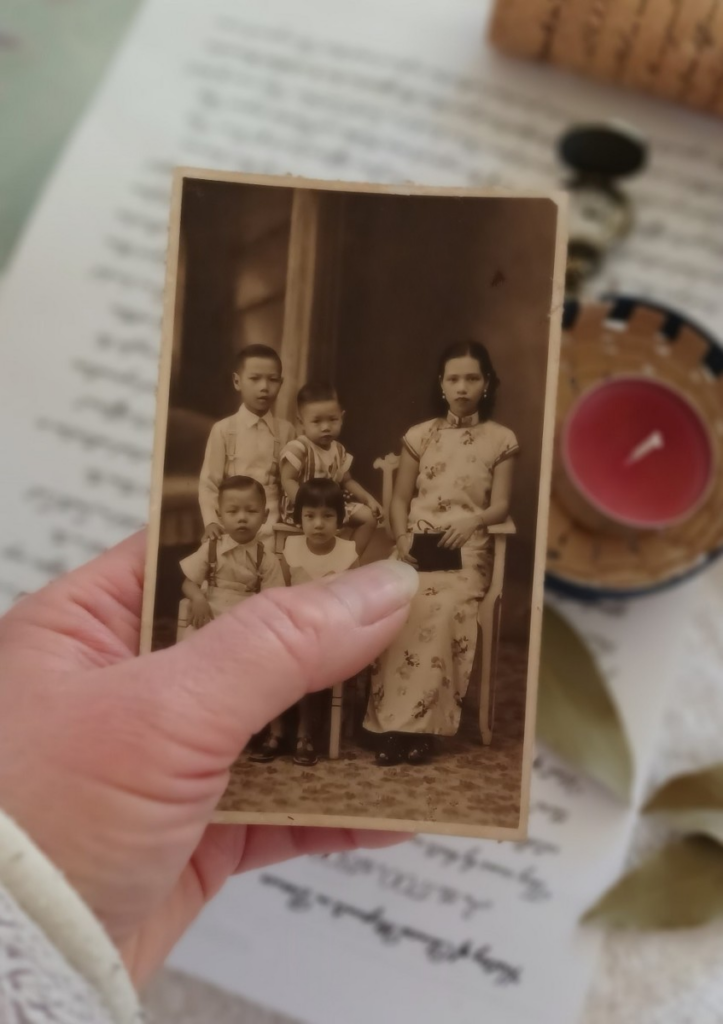
Chong Yu Seng was busy with his business and leading the Chinese community in Miri. The Chinese population was growing and the migrants wanted Chinese education to be introduced in Miri. By the beginning of the 1910s, the first Chinese primary school Chung Hua Miri was established. Chong Yu Seng became the first chairman of the board of directors for the Chinese school.
The Chinese merchants were conducting their trade with a lack of unity among themselves. Chong Yu Seng and some of the merchants suggested an association for the overseas merchants to be formed. The proposition was greeted with a positive response from other merchants. As a result, Yu Seng set up an office on the first floor of his shop to form the Miri Overseas Chinese Chamber of Commerce in 1925. They nominated him as the first president.
The Chinese community in Miri admired Chong Yu Seng for his generosity and kind personality. He supported those who came to him for help. His easy-going personality and social character made him well-loved by the people. He gained many good friends.
Yu Seng was a notable philantropist, and he was highly respected. He made donations and contributed to the well-being of the Chinese people. Apart from Miri, he donated to Kuching and other towns needing money for the community’s welfare.
In 1920, records indicated he donated a wooden tablet to a local cemetery. He then commissioned and built a pergola at the Krokop Chinese Cemetery in 1939 to be used for traditional rituals and ancestor worship. By securing land from the government, he made sure the community had space for burials.
Because of his excellent rapport with the government, Charles Vyner Brooke, who was the Rajah, appointed him as the third Kapitan of Miri in 1927.
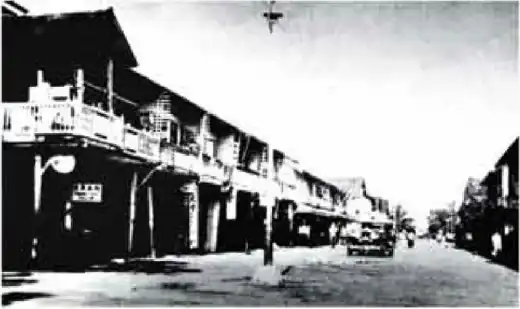
The business continued to prosper for Chong Yu Seng. He became rich through hard work. Yu Seng invested in properties in Xiamen, Singapore, Kuching and Marudi. In Miri, he owned over twenty shophouses, one of them was the family residence. His business had expanded to include having a cinema, winery and pawnshop.
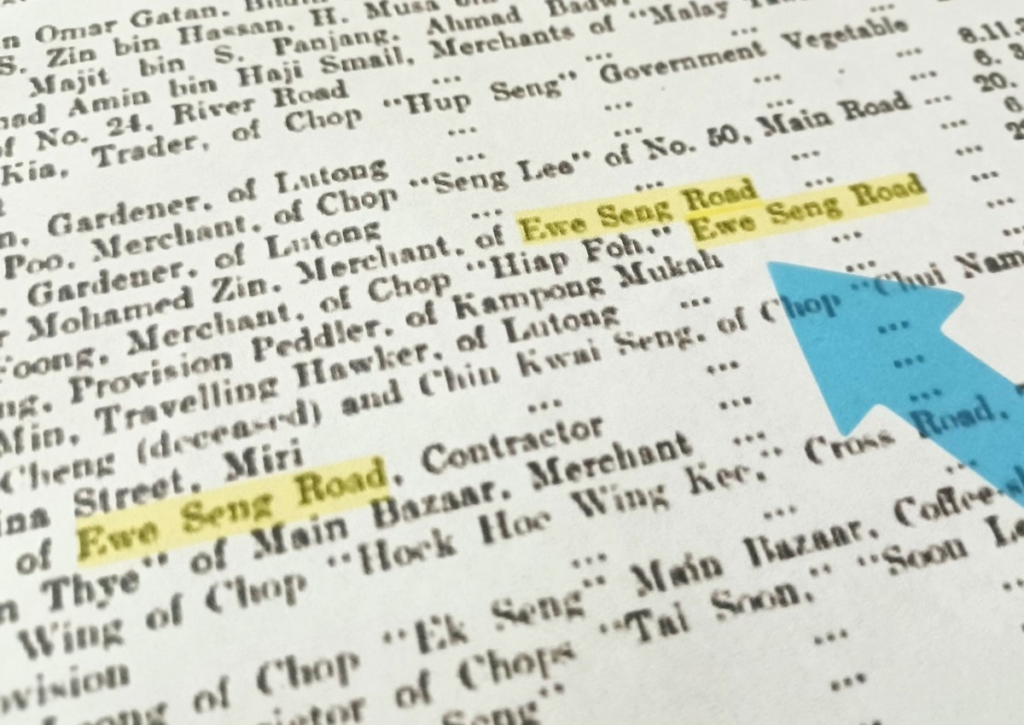
As a tribute to Chong Yu Seng’s contribution to the local community and his position as Kapitan, the road leading to his residence was named after him by the Rajah Government. It was called Ewe Seng Road, which was later modified to Yu Seng Road.
On July 7, 1937, the Japanese invasion of China began. China had its ports blocked by the Japanese. The only access to China was to construct a road (Burma Road) to link Yangon Port to Kunming in China.
All the migrants felt it was their patriotic duty to help their homeland. Chinese communities in South East Asia came together to help. They wanted to provide funds to build the Burma Road. Over 170 delegates met in Singapore in 1938. Chong Yu Seng was one of the seven delegates from Sarawak to attend the meeting. They needed to recruit volunteers to deliver essentials and medical supplies from Burma to Yunnan.
Hence, the China Relief Fund was set up. Chong Yu Seng and the Chinese community in Miri campaigned actively for fundraising for the fund.
When the Japanese invaded Miri and Sarawak in December 1941, Yu Seng disguised as a local fisherman in the area. Yu Seng and his family were able to escape from Miri and they took refuge in Baram. Baram was a remote town in the jungles of Borneo. The only mode of transport to Baram was by boat along the Baram River. This river was (and still is) infested with large crocodiles. The family was safe in Baram. They remained in Baram until the war was over.
Chong Yu Seng continued to support the China Relief Fund and anti-Japanese movement during World War II. The war between Japan and China intensified. The Japanese army went through successive defeats. They began to focus on the overseas Chinese leaders in South East Asia. Chong Yu Seng managed to eliminate all China Relief Fund evidence before the Japanese hunted down the Chinese leaders. The Japanese arrested Chong Yu Seng, but with the help of good friends whom he had helped, Yu Seng was able to escape.
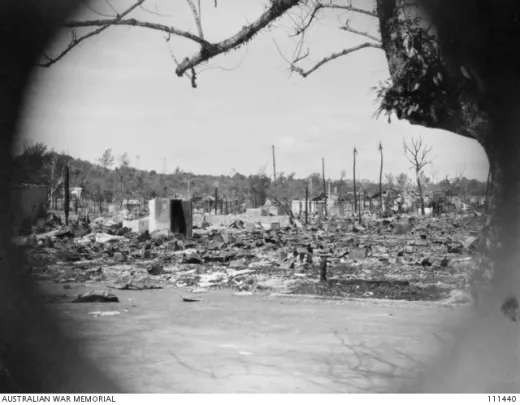
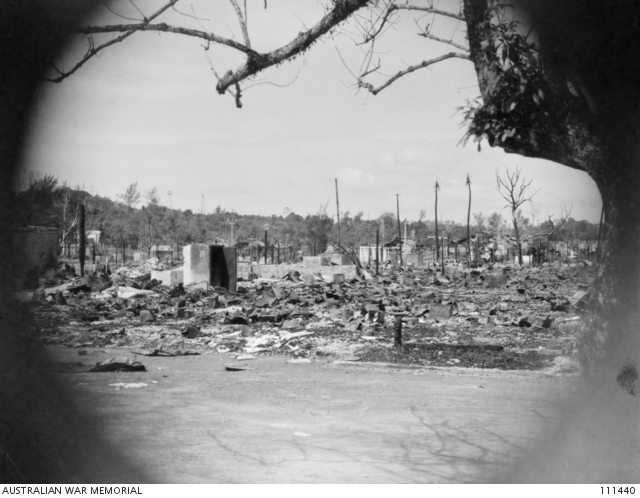
In 1945, towards the end of the Japanese occupation, allied forces conducted aerial bombings on Miri and Lutong oil fields. Ground assaults followed this and purged the Japanese sites. Yu Seng’s home, shophouses and business were wiped out in the bombings. Everything he built in Miri had perished.
As if it could not be worse, in April 1946, a fire in Marudi destroyed his properties there. The Rajah government ended in July 1946, and Sarawak became a crown colony.
After the war, the residents were allowed to reclaim their properties that were lost in the war. Chong Yu Seng did not want to proceed with the reclamation due to the complex legal proceedings. At the same time, the loss he suffered was too great for him to bear. His health was also failing by then.
On July 13, 1946, Chong Yu Seng and his family left Miri for Kuching. He still had several shophouses in Kuching. The family moved into one of the double-story shophouses on Padungan Road. It would be their home for many decades.
An illness was prevailing in his body when Yu Seng was still the Kapitan of Miri. Medical aid was not advanced then. Some illnesses were not known to the doctors yet. A tumour was growing. In modern times, we all recognize it as cancer. When the tumour became bigger, it would cause pain to the person.
Yu Seng began using opium as a painkiller. It is like the use of morphine. They brought an opium bed into his residence. The children recalled seeing their father spending long hours smoking on his opium bed. When they grew up, they could still remember the distinctive smell of his smoking.
Traditional remedies were used to help cure Yu Seng’s illness. Tiger bile and bear bile, used in traditional Chinese medicine, were also sought. Only the wealthy could afford the bile of a tiger. Yu Seng sent some of his friends all over the region to look for the rare tiger bile.
Chong Yu Seng passed away at his home in Kuching on November 17, 1950. He was only 57.
Chong Yu Seng left behind many properties for his children. His sons inherited all the properties that were in Singapore. One shophouse on Padungan Road was for his wife, and he allocated the remaining shophouses along the same road to his daughters.
His wife Yam Ah Soon passed away in the early 1960s. Their children continued to occupy their Padungan home for decades. They live a quiet life.
The road was originally spelled as Ewe Seng Road in the 1930s. The name was changed to Yu Seng Road a few decades ago. It is now known as Jalan North Yu Seng (North Yu Seng Road) and Jalan South Yu Seng (South Yu Seng Road).
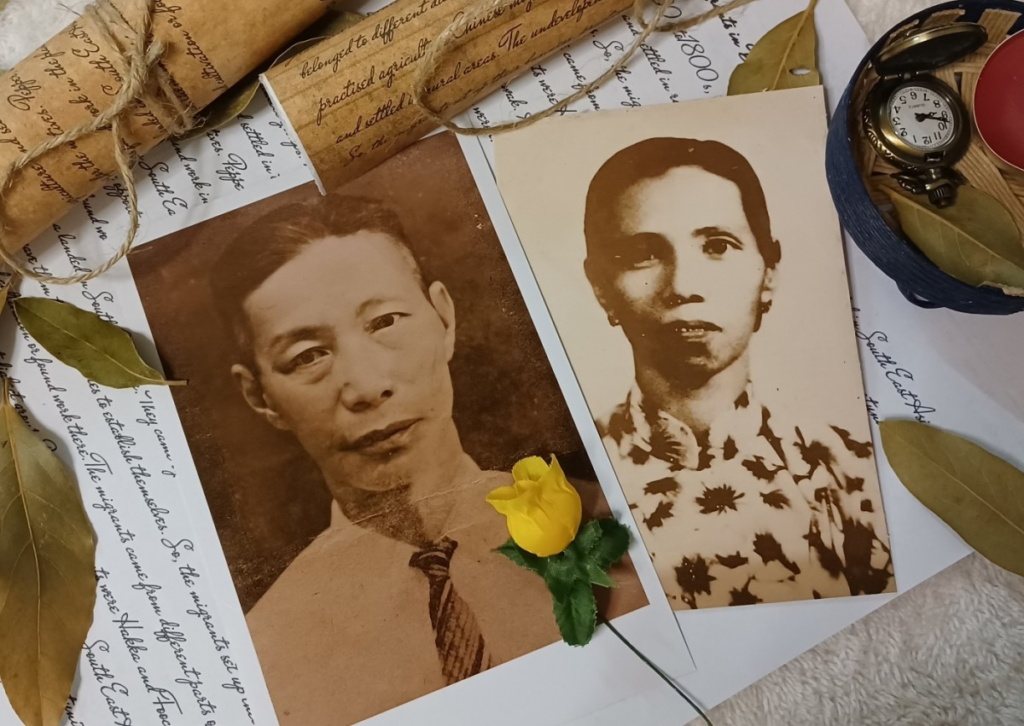
As a community leader, entrepreneur, and philanthropist, Chong Yu Seng contributed to the beginnings of the Chinese community in Miri.
He played a key role in founding Chinese institutions, for instance, the first Chinese primary school and the Miri Chinese Chamber of Commerce. They built the basis for the community’s future in education and economics.
His wartime suffering revealed his commitment to the Chinese community.
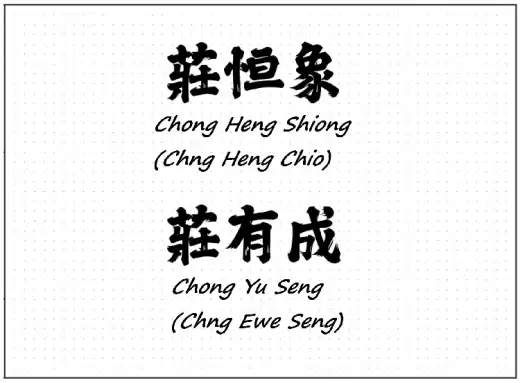
The names mentioned in this article were in Chinese. The surname is often misspelled in translation by others, eventhough only Chng and Chong had been used in all legal documents like birth certificates, family records, and other official papers.
A presentation of their names written in traditional Chinese characters are in the picture above.
Details of the persons in this article have been disclosed to the author by immediate family members of the mentioned persons. The content must not be used without the consent of the author.
The author of this article is a descendant of Chong Heng Shiong and Chong Yu Seng.
Life History of the Pioneering Kapitans: Yu Seng Road Miri
© 2021 lady rain
About the author

Lady Rain lives in Australia and enjoys writing about travels, paper quilling crafts and historical events.



.JPG)
.jpg)