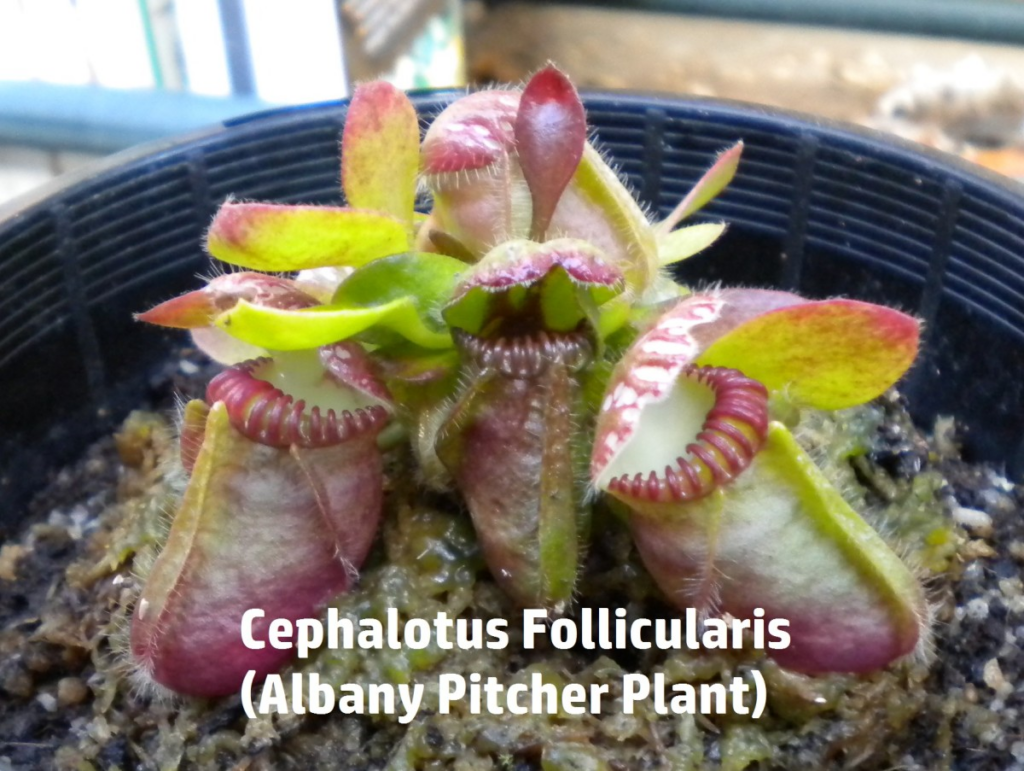
If you love carnivorous plants like venus fly traps, you will love the cephalotus. It is a rare beauty. The cephalotus follicularis is native to only one place in the whole world, in the south west corner of Western Australia near Albany. Hence, the common name for this carnivorous plant is Albany Pitcher plant. It thrives in moist peat soil near streams and in the wetlands. For hobbyists and collectors, the cephalotus follicularis is usually grown in a terrarium for carnivorous plants in places with cold winters.
The plant has two kinds of leaves. Pitchers leaves or summer leaves are mainly produced during the growing season in spring, summer and autumn. The pitchers are filled with fluid and they grow up to 5 centimetres in size while resting on the ground. Each pitcher has a small lid over the top of the pitcher opening. In hot and dry conditions, the lid tend to close a little.
The pitchers usually grows to about 5 cm in height. Any insects that happen to wander into the open pitchers will never be able to make their way out once they fall into the pitchers which are filled with digestive liquid. This plant attracts ants in particular so it must have a liking for these insects.
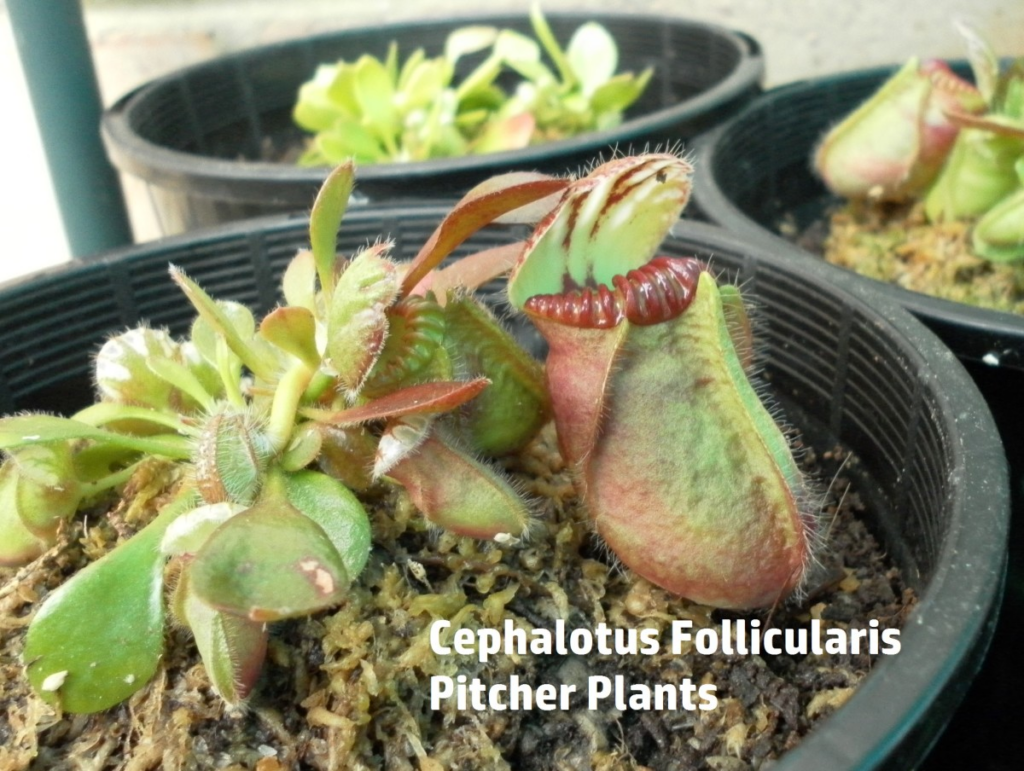
Flat foliage leaves or winter leaves are produced when plant growth slows down towards end of autumn. The leaes can grow up to several centimetres long. The plant is pretty much dormant in winter especially when temperatures are low. During this time, it will lose most of the pitchers and only a few flat leaves will remain on the plant.
This pitcher plant has very fragile root systems and does not like the roots being disturbed. Great care must be taken when transplanting this plant. In summer, the roots must not get heated up or dried up.
In early spring, a tall stem will emerge from the centre of the crown to produce small white flowers at the end of the stalk. The stalk can grow up to 60 centimetres. The tiny flowers attract pollinators although the flowers are self fertile. If there are lack of pollinators, it is a good idea to do some pollinating with a small brush if you want to collect some cephalotus seeds. These seeds will germinate pretty fast if they are sown right away.
The outer surface of the pitchers of the cephalotus are lined with nectar. Insects find this feature very attractive and they tend to follow the sweet trail to the mouth of the pitcher. When the insects enter this trap, they will not be able to escape the slippery walls inside the pitcher, hence they will fall deeper into the belly of the pitcher that is filled with digestive liquids.
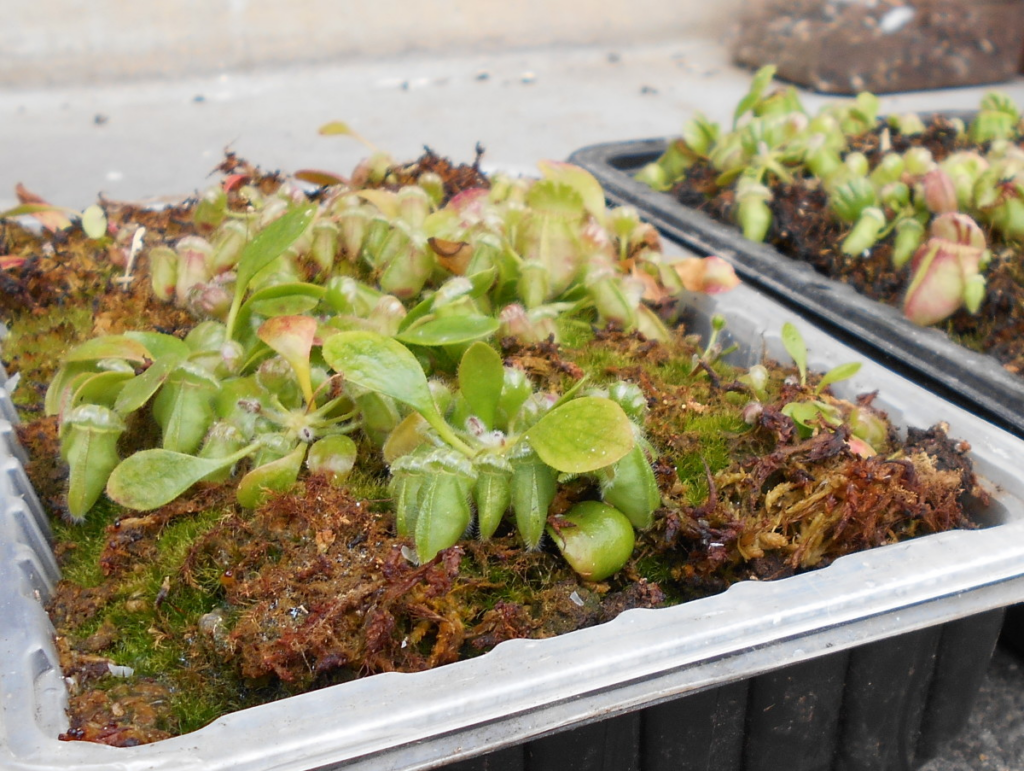
The cephalotus can be propagated with leaf cuttings or root cuttings. This method of propagation will take a lot of patience as it can take many months before you are able to see new baby plants emerging. The soil mix for propagating cephalotus is usually a mixture of perlite, peat and sand. It might take many attempts to get the proportion of soil mix correct because every cephalotus plant seem to have different tolerance to growing conditions. Baby cephalotus plants also require more humidity and moisture in order to grow.
Collecting cephalotus from the wild is prohibited as these plants are protected species. Plant nurseries that sell these plants now propagate them using tissue culture methods. To find a cephalotus follicularis for sale in the nursery is just as rare as finding the plant in the wild, so if you happen to find Albany Pitcher Plants for sale in your local nursery, just buy one or more! That was what I did many years ago and now I have dozen of plants and propagating the cephalotus has become a hobby.
The Rafflesia Plant – The Largest Carnivorous Flower in the World
See The Largest Carnivorous Pitcher Plants Display in Borneo
Learn How to Grow the Most Beautiful Cactus Plants
© 2011 lady rain

About the author
Lady Rain lives in Australia and enjoys writing about travels, paper quilling crafts and historical events. She wrote on HubPages for 14 years.