Have you seen the largest flower in the world? In the tropical rainforests of Borneo, there is an amazing parasitic exotic plant called the Rafflesia which produces the most gigantic flowers in the world. The plant’s name honors Sir Thomas Stamford Raffles, who was the governor of Sumatra in the early 1800s and known for founding Singapore.
The unusual Rafflesia plant has no leaves, stems or roots. Being endoparasitic, the Rafflesia attaches itself onto a host plant for nutrients and survival. The host plant is the Tetrastigma vine that grows only in the primary rainforests. This makes the Rafflesia very rare and hard to locate. Besides, it is even more difficult to see the Rafflesia blooming. Reaching this plant involves extensive travel and jungle trekking because it blooms at high altitudes.
A Rafflesia bud can take up to one year to develop before it transforms into a magnificent giant flower measuring almost one metre across. One single flower can weigh up to a massive 11 kg in weight. A typical Rafflesia flower consists of five huge fleshy leathery petals that are red in colour with wart-like mottles. The centre of the flower contains a disc with many vertical spines. The gigantic flower will stay open for about five days after which it will start to wilt. The red colour starts to change and turns brown. Finally it becomes black and collapses into a big slimy mass.
The Rafflesia plant’s huge flowers smell like decaying meat in their final stage of decay, which is why locals call them “corpse flower” or “meat flower”. The pungent smell attracts insects like bugs and flies to the flowers to assist in pollinating the male and female flowers so that more Rafflesias will continue to grow.
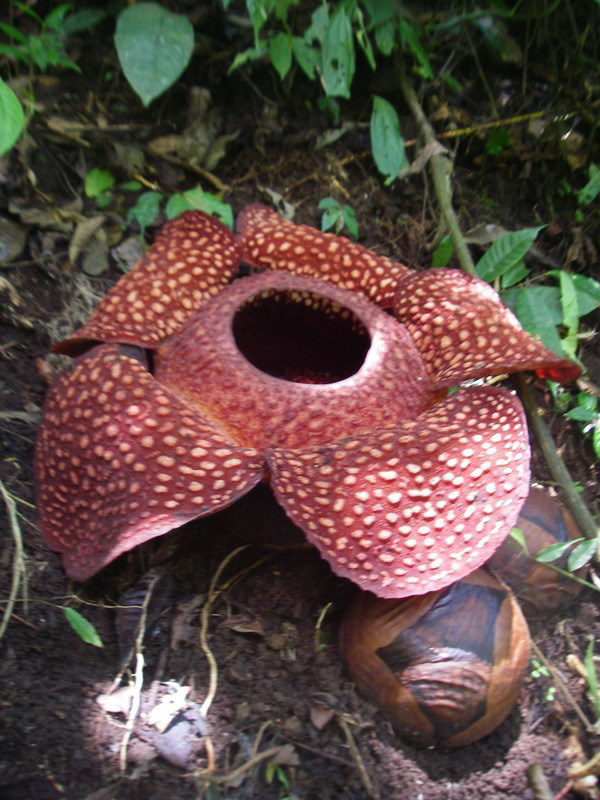
There are several species of Rafflesia found in the jungles of Borneo, Peninsular Malaysia, Sumatra, Thailand and Philippines. All the species are endangered and threatened by logging, ethnobotanical collecting and burning of primary forests especially in Borneo and Sumatra.
In recent years, conservation of the Rafflesia has been given a priority in the state of Sabah in Malaysia as this unique plant is on the endangered species list and is on the brink of extinction. Areas inhabiting the Rafflesia are now being monitored and protected in the country.
Cephalotus Follicularis: See the Most Beautiful and Rare Carnivorous Plant
See The Largest Carnivorous Pitcher Plants Display in Borneo
Learn How to Grow the Most Beautiful Cactus Plants
Life History of The Pioneering Kapitans: Yu Seng Road Miri
© 2011 lady rain

About the author
Lady Rain lives in Australia and enjoys writing about travels, paper quilling crafts and historical events. She wrote on HubPages for 14 years.